







A Global Snapshot Of Obesity Rates
Obesity does not distribute evenly across the globe. In some Pacific Island nations,…
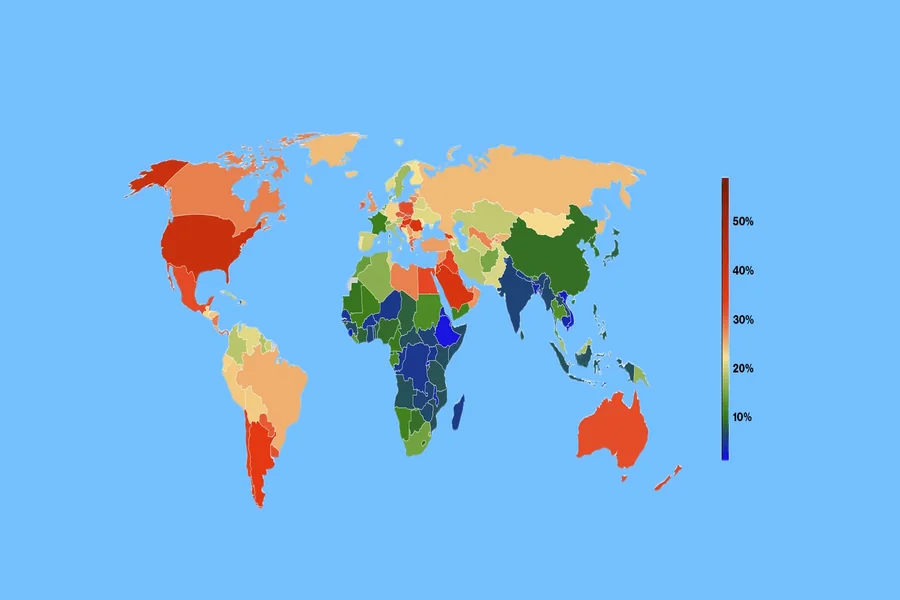
Obesity does not distribute evenly across the globe.
In some Pacific Island nations, adult obesity rates exceed 50 percent. In parts of East Asia and sub-Saharan Africa, rates remain far lower, though they are rising steadily. The United States, several Middle Eastern countries, and parts of Latin America report some of the highest prevalence worldwide.
The numbers vary. The pattern persists.
Urbanization, economic growth, and food system shifts often precede rising obesity rates. Countries undergoing rapid development frequently see weight gain accelerate within a generation.
Change happens quickly.
Geography shapes opportunity, exposure, and risk. Where someone lives influences what food is available, how much movement daily life requires, and what healthcare resources exist.
Food Environments And Economic Transition
Traditional diets once centered on whole grains, legumes, vegetables, and modest portions of animal protein. In many regions, these patterns have shifted toward highly processed foods rich in refined carbohydrates and fats.
Convenience spreads fast.
As multinational food corporations expand into emerging markets, calorie-dense products become accessible and affordable. Sugary beverages, packaged snacks, and fast food outlets increase in urban centers.
Lower-income communities often face limited access to fresh produce and safe recreational spaces. Economic inequality compounds dietary risk. Cheap calories frequently lack nutritional density.
Geography determines availability.
In contrast, some countries maintain strong culinary traditions and public health policies that support balanced eating. Food culture interacts with economics to shape weight trends.
Urban Design And Physical Activity
Movement patterns differ dramatically by location.
In dense European cities, walking and cycling are common modes of transportation. Public transit requires daily steps. Sidewalks are built for pedestrians.
Activity integrates into routine.
In car-dependent regions, commuting often involves long periods of sitting. Suburban design may limit safe walking paths. Occupations increasingly require screen time rather than manual labor.
Rural settings vary as well. Agricultural communities may demand physical exertion, while other rural areas lack recreational infrastructure.
Geography influences motion.
The built environment shapes daily energy expenditure more consistently than individual motivation alone.
Cultural Norms And Body Image
Cultural attitudes toward body size differ across societies.
In some regions, higher body weight has historically symbolized prosperity and health. In others, thinness is idealized. These perceptions influence both personal behavior and policy priorities.
Norms matter.
Stigma also varies. In certain countries, obesity carries heavy social judgment. In others, it may be normalized as prevalence rises. Social pressure can drive dieting behaviors, yet stigma can also discourage people from seeking care.
Health messaging reflects cultural values.
Public campaigns that succeed in one country may fail in another if they do not align with local beliefs about food, family, and body image.
Access To Healthcare And Medical Weight Loss Treatments
Geography shapes not only risk but response.
In high-income nations, medical weight loss treatments such as prescription medications and bariatric surgery are increasingly available. Insurance coverage varies, yet specialized clinics and trained providers exist.
Access remains uneven.
In low- and middle-income countries, healthcare systems may prioritize infectious disease and maternal health over obesity management. Weight loss medications may be scarce or unaffordable. Surgical programs may be limited to major cities.
Digital health platforms are beginning to bridge some gaps, offering virtual consultations in regions with provider shortages. Still, disparities persist.
Treatment options depend on infrastructure.
Without screening, counseling, and pharmacologic support, individuals rely primarily on lifestyle change in environments that may not support it.
Climate, Policy, And Long-Term Trends
Climate and policy also influence obesity patterns.
Extreme heat can discourage outdoor activity in certain regions. Agricultural policy affects food pricing and crop production. Subsidies may favor corn and sugar production over fruits and vegetables.
Policy shapes plates.
Countries that implement sugar taxes or restrict marketing to children sometimes report shifts in purchasing behavior. School meal standards and urban planning decisions influence long-term population health.
Globalization continues to blur boundaries.
As food supply chains connect continents, dietary patterns converge. Obesity rates rise in countries once considered low risk. Meanwhile, public awareness of metabolic health spreads across borders.
Geography still matters.
Where a person lives affects daily movement, food access, cultural norms, economic opportunity, and healthcare availability. Obesity reflects these layered influences rather than isolated personal choice.
Understanding global variation reframes the conversation. It shifts focus from individual blame to structural context. It encourages policy, urban planning, and healthcare systems to work alongside personal responsibility.
The map tells a story.
It is a story of environment, culture, economics, and biology intersecting in different ways across continents.

Christian Pulisic’s Chelsea Struggles Explained—and Why Liverpool Could Be His Redemption Story

The Role of Blockchain Payments in Modern Commerce

How to Reach Buyers Before They Contact Another REALTOR

The Legal Side of Pedestrian Safety: What Accident Victims Should Know