







How To Store Power Cords Properly To Extend Lifespan
Power cords have a short lifespan, not because they are poorly made, but…
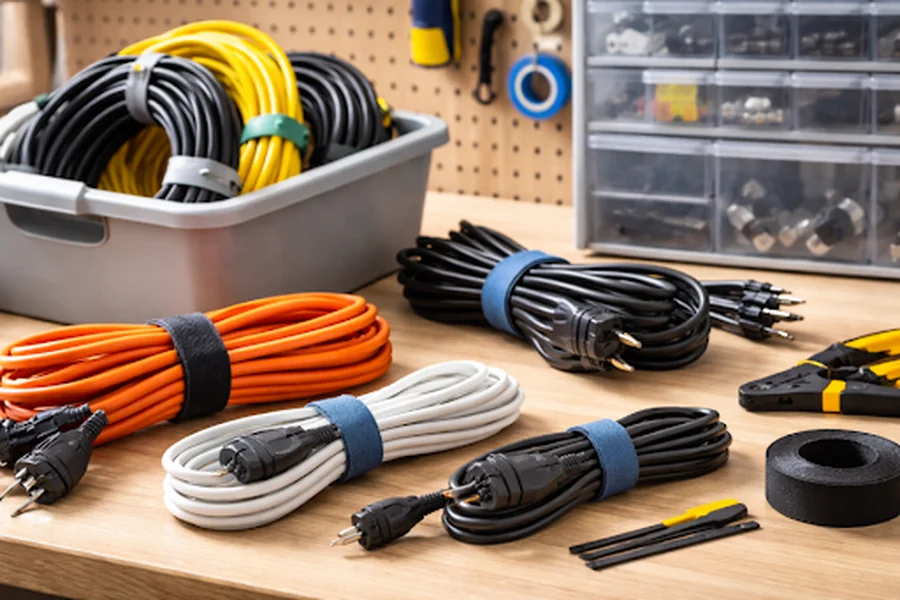
Power cords have a short lifespan, not because they are poorly made, but because of how they are handled and stored. You may observe broken insulation, exposed wires, or an uneven power supply, which may result from simple storage errors. In addition, internal conductors are weakened by tangled cords, tight bends, and exposure to heat or moisture. These minor problems eventually add up to performance and safety concerns.
Meanwhile, the need to change cords now and then introduces an extra expense and inconvenience. Thus, learning how to store properly is not only about being organized but also about maintaining durability, reliability, and safety.
This article describes the process of storing power cords in the correct manner to extend their lifespan and achieve reliability.
1. Coil Cords Correctly To Prevent Internal Damage
When storing power cords, coiling is a very important factor in maintaining the internal structure of power cords. Incorrect coiling leads to stress points, which weaken copper conductors and insulation with time.
You should use over-under coiling instead of the tight coiling around the hand or even the elbow. This technique switches the rotation of both loops, avoiding winding and inner tension. As a result, the cord maintains its natural lay without developing kinks.
Also, avoid sharp bends, particularly near connectors. Mechanical stress already exists in these areas; thus, mishandling may accelerate wear. Maintaining loops loose and uniform can evenly distribute tension.
Moreover, avoid knots or tapes to secure the coil; instead, use Velcro straps or soft ties. Knots may squeeze insulation together and damage internal wiring, while the tape leaves a residue and makes it less flexible.
With proper coiling practice, you can significantly reduce internal fatigue and prolong the service life of your cords.
2. Keep Cords Away from Heat and Moisture
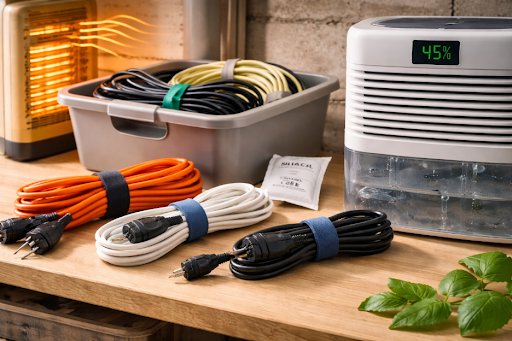
One of the most neglected factors in cord degradation is environmental exposure. Even the best insulation material can wear out under extreme conditions.
Heat, for instance, softens insulation, making it more prone to cracking. Thus, keep the cords away from radiators, bright sunlight, or heat-producing machines. Similarly, attics and vehicles can reach high temperatures, making them unsuitable storage locations.
Conversely, moisture presents another form of risk. Wet conditions may cause connector corrosion and may also result in insulation failure. As a result, always store cords in dry, well-ventilated spaces.
When using cords outside or in harsh conditions, make sure to dry them thoroughly before storing them. Stagnant water may corrode materials and diminish the performance of reliability.
Finally, environmental exposure control also ensures electrical safety and structural integrity.
3. Avoid Overloading Storage Spaces
At first glance, it may seem efficient to have several cords in one container. However, compression damage can occur when too many cords are stored in a container. Insulation of cords may deform with time when stacked or pressed tightly together.
Rather, make sure that each cord has enough space to maintain its natural shape. Store bins or hooks should be used to store cords so they do not put too much pressure on them. Hanging cords on broad hooks is very useful, as it prevents flattening and maintain flexible.
In addition, do not put heavy objects on top of stored cords. Constant stress may cause insulation layers to break, leading to hidden interior damage. Although the outer layer might appear intact, the inner conductors can already be damaged.
By ensuring that the cords have sufficient space, you maintain the structural integrity of the cords and ensure performance consistency.
4. Store Based on Usage Type and Environment
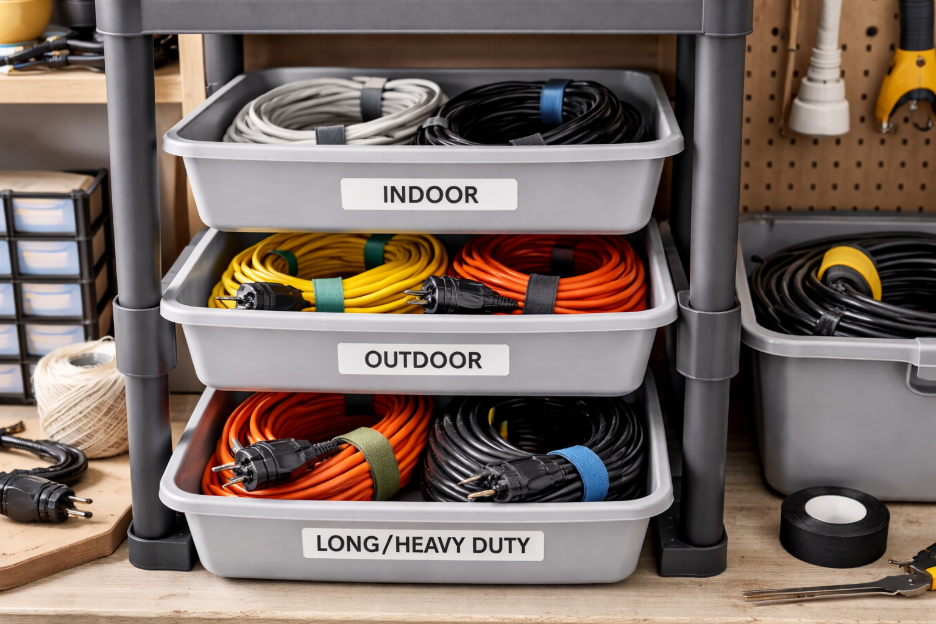
Not all cords are the same; therefore, mixed-up storage without care may result in unwarranted wear. As an example, industrial or outdoor heavy-duty cords might have a heavier insulation and may need to be handled differently than lighter indoor cords.
To keep them organized and avoid destruction, sort cords according to:
- Usage frequency
- Environmental exposure
- Length and thickness
Cords that are frequently used must be readily available to minimize handling and tangling. Meanwhile, specialty or seasonal cords may be stored in separate and protective containers.
Also, it is important to label cords in order to eliminate unnecessary uncoiling and rehandling to locate a type. This helps minimize wear due to repetitive manipulation.
When you match storage techniques and use patterns, you reduce handling stress and enhance the efficiency overall.
5. Inspect Before Storing to Prevent Long-Term Damage
Storage is not just about placing cords aside—it’s also an opportunity to assess their condition. Ignoring minor damage before storage can lead to more serious issues later.
Before storing, check for:
- Cuts or cracks in insulation
- Bent or loose connectors
- Discoloration or burn marks
If any damage is detected, address it immediately. Storing a compromised cord can worsen the issue and create electrical hazards during future use.
Furthermore, clean cords before storage. Dust, grease, or debris can degrade insulation over time. A simple wipe with a dry or slightly damp cloth ensures the cord remains in optimal condition.
Regular inspection combined with proper storage creates a proactive maintenance routine. This not only extends lifespan but also ensures reliable and safe operation.
Conclusion
Proper storage is a critical yet often overlooked factor in extending the lifespan of power cords. While durability depends on material quality and design, handling and storage ultimately determine how long those qualities are preserved.
By coiling cords correctly, controlling environmental exposure, avoiding compression, organizing based on usage, and inspecting regularly, you create a system that protects both performance and safety. These practices are straightforward, yet their impact is significant.
Ultimately, when cords are stored with intention and care, they remain reliable, efficient, and ready for use whenever needed.

Seedance 2.5 vs Veo 3.1 in Education: Which Workflow Fits Guided Visual Lessons Better?

Electrochromic Technology Comes to Cars

Why Media Owners Need Stronger Protection for Digital Assets

Architectural Defense: How RYAN London Reimagines Shock Absorption for the Upcoming iPhone 18