





AI Photo Restoration vs Human Restoration: Which Produces Better Results?
Old photographs preserve moments that cannot be recreated. Whether it is a faded…
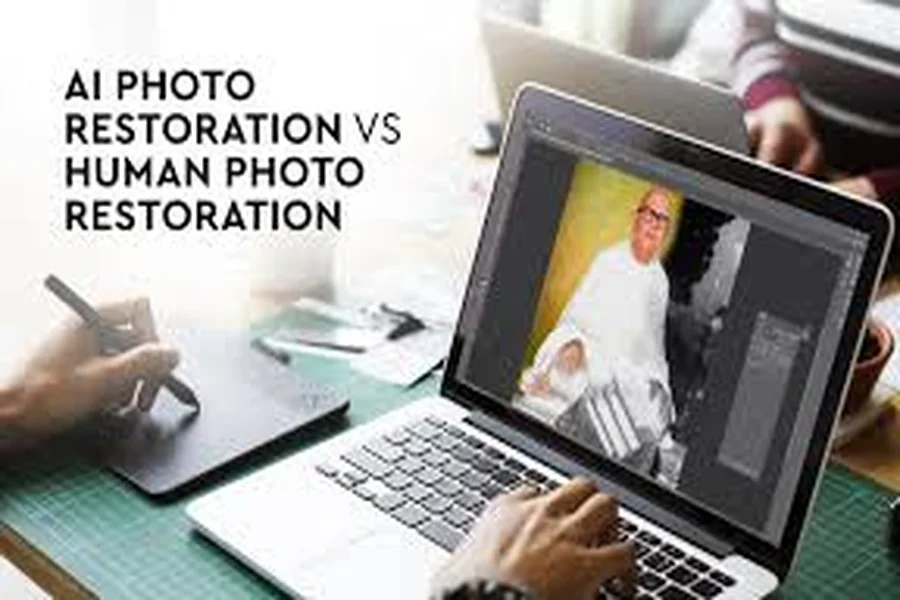
Old photographs preserve moments that cannot be recreated. Whether it is a faded family portrait, a damaged wedding picture, or a historical image passed down through generations, restoring these photos has become increasingly important in the digital age.
Today, people have two main restoration options: AI-powered photo restoration tools and professional human restoration services. Artificial intelligence can now sharpen blurry images, remove scratches, and enhance facial details within seconds. At the same time, experienced photo restoration artists continue to offer manual retouching services designed to recover damaged photographs with greater precision and authenticity.
This raises an important question: AI photo restoration vs human restoration, which produces better results?
The answer depends largely on the condition of the photo, the level of detail required, and the importance of preserving realistic historical accuracy.
Quick Answer: AI vs Human Photo Restoration
For lightly damaged images and quick enhancements, AI photo restoration can produce fast and convenient results. However, for heavily damaged, historically important, or emotionally valuable photographs, human restoration generally delivers more accurate, natural, and reliable outcomes.
In most professional workflows today, the best results often come from combining AI tools with manual human retouching.
What Is AI Photo Restoration?
AI photo restoration uses machine learning algorithms to automatically repair and enhance damaged images. These systems are trained on large image datasets and can recognize patterns in faces, textures, colours, and objects.
Modern AI restoration tools can automatically:
- Sharpen blurry photos
- Remove scratches and dust
- Improve facial clarity
- Upscale low-resolution images
- Correct faded contrast
- Colourise black-and-white photos
- Reduce image noise
Many online tools now offer instant restoration with minimal user input, making the technology accessible for everyday users.
Advantages of AI Photo Restoration
Fast Processing Speed
One of the biggest advantages of AI restoration is speed. Automated tools can enhance photos within seconds or minutes compared to manual restoration, which may take hours depending on image damage.
Affordable and Accessible
Many AI-powered tools are free or relatively inexpensive. Users can upload photos online without needing advanced editing skills.
Useful for Minor Damage
AI works particularly well for:
- Small scratches
- Slight fading
- Minor blur
- Basic contrast correction
- Low-level enhancement
For casual restoration needs, AI often provides acceptable improvements quickly.
Helpful for Batch Processing
AI systems can restore multiple images simultaneously, making them useful for digitizing large photo collections efficiently.
Limitations of AI Photo Restoration
Despite impressive technological progress, AI restoration still has major limitations.
AI Often Creates Inaccurate Facial Details
One common issue is facial reconstruction errors. AI systems sometimes “guess” missing details incorrectly, especially in heavily damaged photographs. This can produce unrealistic eyes, distorted expressions, or faces that no longer resemble the original person.
Overprocessed Results
Automated restoration frequently oversmooths skin, removes natural textures, or adds artificial sharpness that makes photos appear unnatural.
Difficulty With Severe Damage
AI struggles when:
- Large sections of the image are missing
- Faces are heavily damaged
- Photos contain unusual lighting or historical textures
- Important details require contextual interpretation
In these situations, automated tools may generate inaccurate restorations rather than carefully reconstructing the original image.
Lack of Historical and Emotional Understanding
AI processes images mathematically. It cannot understand family significance, historical context, or emotional value the way a skilled human restoration artist can.
What Is Human Photo Restoration?
Human photo restoration involves professional editors manually repairing damaged images using advanced retouching software and artistic techniques.
Unlike automated systems, human restorers analyze each image individually and make careful editing decisions based on:
- Facial anatomy
- Historical accuracy
- Lighting consistency
- Texture preservation
- Emotional authenticity
- Client preferences
Manual restoration is significantly more time-intensive, but it often produces higher-quality and more natural results.
Advantages of Human Photo Restoration
Greater Accuracy
Human editors can carefully reconstruct damaged details instead of relying entirely on automated predictions. This is especially important for restoring faces and historically significant photographs.
More Natural Results
Professional restoration artists preserve realistic textures, lighting, and skin details that AI tools often oversoften or distort.
Better Handling of Severe Damage
Manual restoration is far more effective for:
- Torn photographs
- Missing sections
- Water damage
- Heavy scratches
- Extreme fading
- Complex restoration work
Experienced retouchers can rebuild damaged areas using surrounding visual information and artistic judgment.
Personalized Editing Decisions
Human restorers can adapt their approach based on client preferences. Some families prefer minimal restoration to preserve authenticity, while others want colourisation or enhanced clarity.
This flexibility is difficult for fully automated AI systems to replicate accurately.
AI Photo Restoration vs Human Restoration: Side-by-Side Comparison
| Feature | AI Restoration | Human Restoration |
| Speed | Very fast | Slower |
| Cost | Lower | Higher |
| Ease of Use | Beginner-friendly | Requires professional service |
| Minor Damage Repair | Good | Excellent |
| Severe Damage Repair | Limited | Excellent |
| Facial Accuracy | Inconsistent | More accurate |
| Natural Texture Preservation | Often overprocessed | More realistic |
| Historical Accuracy | Limited | Stronger |
| Emotional Understanding | None | Human judgment |
| Customization | Minimal | Highly customizable |
Which Produces Better Results?
For simple enhancements, AI restoration may be enough. If a photo only has minor fading or light scratches, automated tools can save time and money.
However, for valuable family photographs or severely damaged images, human restoration almost always produces better final results.
This is particularly true when:
- The image has emotional significance
- Facial details are heavily damaged
- Historical accuracy matters
- Large portions of the photo are missing
- Realistic textures must be preserved
Human editors are better equipped to make complex visual decisions that AI still struggles to handle consistently.
Why Hybrid Restoration Is Becoming the Industry Standard
Many professional restoration services now combine AI technology with manual editing. AI tools help speed up early enhancement stages, while experienced artists refine the image manually to improve realism and accuracy.
This hybrid workflow offers several advantages:
- Faster turnaround times
- Improved efficiency
- Better preservation of details
- More natural final results
- Reduced editing inconsistencies
Professional services such as FixThePhoto often use a combination of AI-assisted tools and human retouching techniques to restore damaged family photographs more accurately.
Rather than replacing artists completely, AI is increasingly becoming a supportive tool within professional restoration workflows.
How to Choose the Right Restoration Option
Choosing between AI and human restoration depends on the condition and importance of the photograph.
AI Restoration May Be Best If:
- The damage is minor
- You need fast results
- The image is not historically important
- You are restoring large photo batches
- Budget is a primary concern
Human Restoration Is Usually Better If:
- The photo is heavily damaged
- Faces require careful reconstruction
- Historical accuracy matters
- The image has strong emotional value
- You want natural-looking results
For irreplaceable family photographs, professional restoration is often the safer choice.
Final Verdict: AI Photo Restoration vs Human Restoration
AI has transformed the photo restoration industry by making enhancement tools faster, cheaper, and more accessible. For basic restoration tasks, modern AI systems can deliver impressive improvements in only seconds.
However, when comparing AI photo restoration vs human restoration, human expertise still produces the most accurate and emotionally authentic results for valuable or severely damaged images.
Artificial intelligence is excellent at automation, but professional restoration artists remain better at preserving realism, correcting complex damage, and protecting the emotional integrity of important photographs.
As restoration technology continues evolving, the future will likely rely on collaboration between AI efficiency and human creativity, combining the speed of automation with the precision and judgment only skilled artists can provide.

The Modern Senior Living Experience Explained

Leather Camera Bag for Everyday Photography and Travel
Pore-driving: How A Blackhead Remover Scrub Rescues Your T-zone

Why Quiz-Based Learning Works Better Than Repeated Reading for Many Students