







A Field Guide to Unbiased Online Reviews
Online reviews shape what people buy, watch, download and try next. The challenge…

Online reviews shape what people buy, watch, download and try next. The challenge is that the internet makes opinions feel measurable, a score, a badge or a ranked list can look objective even when it’s built on hidden choices. Understanding unbiased review methods helps you read rankings like a savvy learner, spotting where a score is genuinely earned and where it’s mostly presentation.
Think of this as map reading. A map isn’t the territory, it’s a model of the territory. Reviews work the same way. A good review system models reality clearly enough that you can navigate decisions without getting misled by shortcuts.
What “unbiased” really means in practice
No review is perfectly neutral. People choose what to measure, what to ignore and what to prioritize. Unbiased does not mean emotionless, it means the process is designed to limit distortion. In other words, the review should be predictable. If you understand the rules of the scoring system you should be able to anticipate how the site would rate two similar products.
A credible review process usually separates three things that often get blended together online:
- Observations: what the reviewer can verify directly
- Judgment calls: preferences and trade-offs, clearly labeled as such
- Standards: the fixed criteria applied to every item being reviewed
When those lines blur, rankings become easy to nudge toward a pre-decided outcome.
The hidden levers behind most rankings
Ranking systems are built from levers, and the levers determine who rises to the top. You can learn to spot them quickly.
The biggest lever is weighting. If a site gives design 40% of the score then a flashy product can outrank a more reliable one. If customer support counts for almost nothing, slow responses will never meaningfully hurt a rating. Weighting is not inherently wrong, but it needs to match what readers care about.
The second lever is test depth. Some items get hands-on testing while others get light summaries. If testing isn’t equal, the ranking isn’t equal either. The third lever is time. A review from two years ago can still rank well even if the product changed, especially in categories where updates are frequent.
A quick way to read any ranking is to ask:
- What does this site reward?
- What does it barely punish?
- How current does the testing seem?
Those three questions explain most mystery outcomes.
What a fair review framework looks like
You don’t need insider knowledge to recognize a strong framework. Like a good quiz, it’s consistent, transparent and hard to game.
A solid review system usually includes:
- Defined criteria with plain-language meaning. A category like usability should include what was checked, not just a vibe.
- A repeatable scoring scale. A 6 should mean the same thing across every review. If everything is an 8, the scale is broken.
- Evidence-based notes. You may not see raw data, but you should see concrete examples that show the reviewer actually used the product.
- Clear handling of red flags. Serious issues should cap a score or trigger warnings, not get averaged away by nicer features.
- Update signals. Reliable sites date updates or explain what changed. Stale reviews are a silent bias.
This isn’t about turning reviews into homework. It’s about knowing whether the score was earned through a system or assembled through storytelling.
How bias sneaks in without anyone noticing
Bias doesn’t always come from dishonesty. Often it comes from convenience.
Reviewers may overvalue what’s easy to measure and undervalue what’s hard. Design and features are visible, fairness and customer support quality can be harder to capture. Another common bias is category drift where the reviewer’s idea of what matters changes over time. If the criteria evolve quietly, comparisons across months become misleading.
Commercial incentives can also distort outcomes, even when no one is lying. If a site earns revenue from referrals, the safest practice is to separate business arrangements from scoring decisions. Some publications do this well. Others don’t, and the rankings start to mirror conversion potential instead of reader value.
When reading any review site, look for language that shows discipline. Does the reviewer explain trade-offs and weaknesses, or does every option feel mysteriously perfect?
Applying the field guide to digital entertainment categories
Digital entertainment reviews are a useful stress test because they blend subjective fun with practical risk. People care about enjoyment, but they also care about clarity, payments, privacy and support when something goes wrong. A fair scoring model needs to reflect both.
This is where good criteria really matter. A credible review in entertainment-style products should make it clear how it checked things like:
- transparency of terms and conditions
- ease of account control and privacy settings
- payment clarity where purchases exist
- customer support accessibility and responsiveness
- overall user experience across devices
The point isn’t to tell you what to like. It’s to give you the information you need to choose without being pushed by hidden incentives.
A fast checklist you can use in under a minute
When you land on a ranked list, do a quick scan before you trust it.
- Does the site explain the criteria and weighting in a way you can follow?
- Are negatives included clearly, not buried or softened?
- Do reviews read like hands-on use or recycled product blurbs?
- Is the content dated or updated, especially for fast-changing platforms?
- Do the rankings feel consistent with the details, or do they conflict?
If the details and the ranking don’t match, trust the details, not the number.
Reading rankings like a confident learner
Learning platforms teach a simple lesson: context changes everything. A country outline is only useful when you understand the scale and the legend. Reviews work the same way. Scores and badges are shorthand, but the criteria are the legend.
Unbiased review methods are less about finding a perfect source and more about understanding how the source thinks. When a site shows its work, applies standards consistently and updates responsibly, you can use its rankings as a map. When it hides the levers, the map starts pointing wherever the publisher benefits most.
The best skill you can build is not memorizing which sites to trust. It’s learning how to read any review system with enough clarity that you can trust your own judgment.

Online Game: Understanding Symbols, Triggers and Feature Rules

How Bingo Plus Login Supports a Safer and More Reliable Digital Account Experience
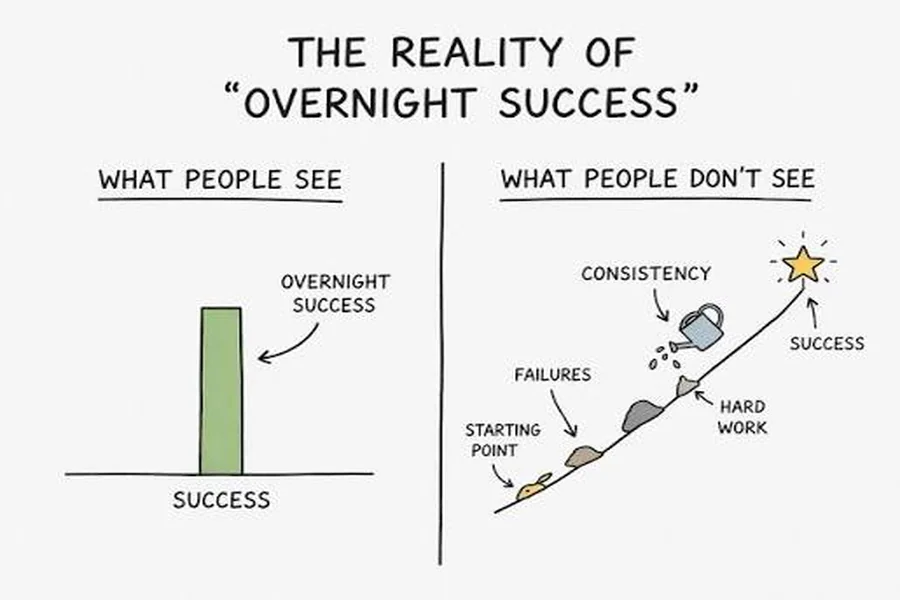
The Obsession of the Internet with Overnight Success

Live Dealer Games Are Taking Over US Online Games