







Travel changes the setting in which people talk
Travel changes the setting in which people talk. Away from familiar routines, ordinary…
How Travel Encourages More Meaningful Conversations
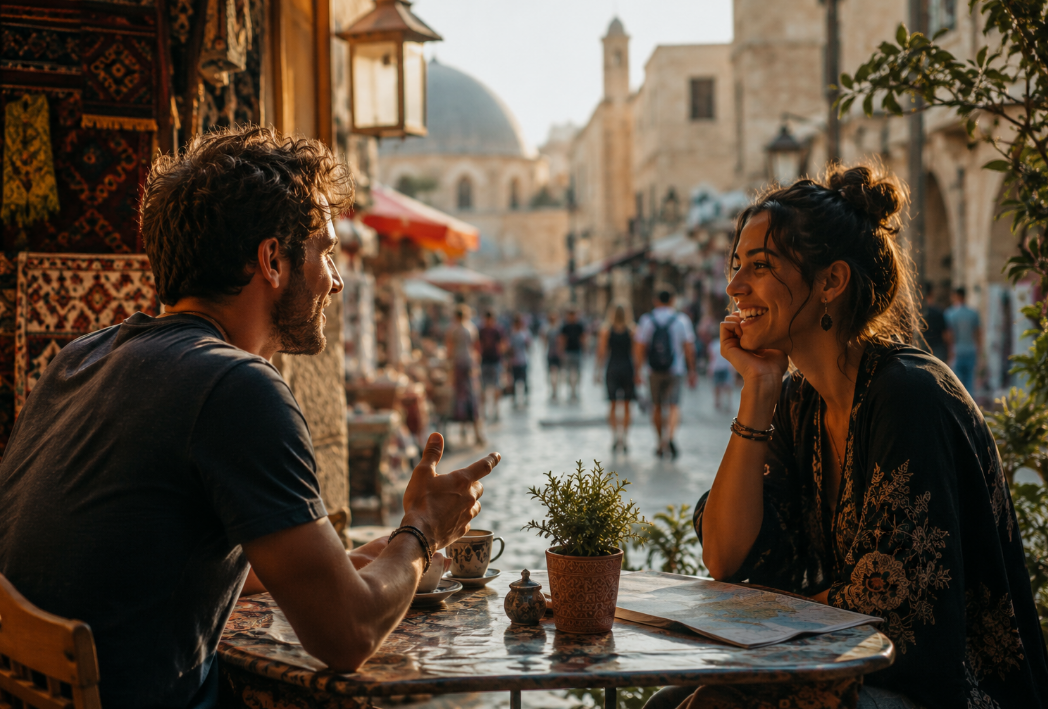
Travel changes the setting in which people talk. Away from familiar routines, ordinary conversations often become more deliberate, more curious, and more memorable. A missed train, a shared meal, a language barrier, or an unexpected local custom can turn small talk into a genuine exchange. For many people, that is one of travel’s quiet advantages: it creates the conditions for better conversation.
This matters beyond tourism. Students, remote workers, business travelers, migrants, and people in cross-border relationships all rely on communication that can bridge differences in language, timing, values, and social norms. Travel does not automatically make people better listeners or more open-minded, but it often gives them a reason to slow down and pay attention.
Defining the idea: what meaningful conversation looks like on the road
Meaningful conversation is not simply a long conversation. It usually involves mutual attention, thoughtful questions, emotional honesty, and a willingness to understand another person’s point of view. In travel settings, those elements appear more often because people are outside their usual scripts.
Cross-cultural engagement, as described in study-abroad guidance from Yale, involves understanding people from different cultures and interacting with them effectively. That idea helps explain why travel can improve conversation: travelers must observe more carefully, suspend quick judgments, and reflect on what they hear rather than assuming everyone means the same thing in the same way
A traveler asking a local about family traditions, work life, or city history is often doing more than gathering information. They are practicing a more attentive kind of exchange.
Why the topic has become more relevant in recent years
Several recent shifts have pushed this subject into wider view. International travel has rebounded, remote work has expanded location flexibility, and concerns about loneliness have become more visible in public health discussions.
UN Tourism reported that international tourist arrivals reached about 1.4 billion in 2024, or roughly 99% of pre-pandemic levels. At the same time, the World Health Organization says 1 in 6 people worldwide experiences loneliness, with serious effects on health and well-being. In that context, the quality of human interaction matters more, and travel has become one place where people actively seek real conversation rather than passive contact.
Digital life has also changed expectations. People now meet through apps, maintain friendships across borders, and continue conversations long after a trip ends. Research reviewed in PubMed Central notes that social media plays a major role in how people manage identity and communication across cultures, especially for expatriates and mobile populations
Common misconceptions and mistakes
Several habits get in the way of genuine connection.
- Believing travel automatically produces deep conversations. It creates opportunities, not guaranteed outcomes.
- Treating locals as cultural tour guides. Conversations work best when curiosity is mutual, not extractive.
- Confusing intensity with intimacy. A powerful talk on a train ride may still be a brief encounter.
- Relying on stereotypes. Someone who travels with a narrow objective, perhaps hoping to meet ukrainian women rather than understand individuals, is more likely to miss the nuance that makes a conversation meaningful.
- Staying in an expat bubble. Familiar company feels easy, but it can limit learning.
- Ignoring digital caution. Cross-border communication can bring friendship and romance, but it also requires attention to privacy, safety, and honesty. Pew found that 52% of dating app users say they encountered someone they believed was trying to
scam them
The key behaviors that make travel conversations deeper
Shared novelty invites openness
New places create natural conversation starters. Travelers ask for help, exchange recommendations, compare impressions, and share uncertainty. That uncertainty can lower social barriers. People who might stay reserved at home often become more open when everyone around them is learning at the same time.
Slower travel supports stronger dialogue
The rise of longer stays is another factor. MBO Partners found a trend toward “slomading,” where mobile workers visit fewer places and stay longer in each one. Longer stays give people time to return to the same café, attend recurring events, and move from transactional exchanges to more personal conversations
Cultural difference sharpens listening
Travelers often discover that the real challenge is not vocabulary but interpretation. Humor, silence, politeness, and disagreement all vary by culture. A person who learns to pause, ask follow-up questions, and notice context usually has better conversations than someone who assumes quick familiarity.
Digital communication extends the exchange
A conversation no longer ends when a trip ends. Messaging apps, group chats, language platforms, and social media let people maintain international ties. That continuity can turn a brief travel encounter into a lasting friendship, mentorship, or relationship.
Practical situations where travel improves conversation
Travel can deepen communication in several real-world settings:
- Study abroad: Students often become better at asking thoughtful questions because they must navigate unfamiliar social rules.
- Business travel: Colleagues who meet in person after remote collaboration often move beyond formal updates and build trust faster.
- Solo travel: People traveling alone are more likely to speak to strangers, join shared activities, and have unplanned conversations.
- Remote work abroad: Longer stays make it easier to form local routines and repeat interactions.
- Cross-border relationships: Distance encourages clearer communication about expectations, values, and future plans.
A traveler who joins a neighborhood cooking class, for instance, may learn more from talking with local participants than from any guidebook. The conversation becomes meaningful because it is tied to daily life, not performance.
Benefits and challenges side by side
|
Travel context |
How conversation changes |
Main benefit |
Main challenge |
|
Short vacation |
Fast, spontaneous exchanges |
Easy social openings |
Talks may stay surface-level |
|
Study or work abroad |
Repeated contact over time |
Better trust and cultural understanding |
Adjustment stress |
|
Solo travel |
More direct interaction with strangers |
Greater confidence and openness |
Safety and fatigue |
|
Long-stay travel or nomad life |
Routine-based conversations |
Deeper local relationships |
Work-life blur |
|
International dating or friendship |
More intentional communication |
Clearer values and expectations |
Stereotypes and misreading signals |
The benefits are real, but so are the risks. Some travelers romanticize conversations simply because the setting is new. Others expect instant closeness without understanding cultural boundaries.
What the future may look like
Meaningful travel conversation is likely to become more hybrid. People will keep meeting online first, then using travel to deepen those connections in person. Translation tools will improve, but cultural fluency will still matter more than perfect grammar. Longer stays may continue to grow as remote work and flexible lifestyles remain part of the global economy.
There is also a broader social shift underway. As loneliness becomes a recognized public health issue, travelers may place more value on community-based experiences, language exchanges, volunteer programs, and local events that encourage dialogue over passive sightseeing
The future of travel may be less about collecting destinations and more about collecting conversations that change how people think.
FAQ
Why do people often have better conversations while traveling?
Travel removes routine and creates shared novelty. People pay closer attention and ask more genuine questions.
Does solo travel encourage more meaningful conversations than group travel?
Often, yes. Solo travelers are usually more approachable and more likely to start conversations with new people.
Can short trips still lead to meaningful exchanges?
Yes. Even a brief encounter can be memorable if both people are present, curious, and open.
How can travelers avoid shallow conversations?
Ask specific questions, listen carefully, avoid assumptions, and show interest in everyday life rather than only landmarks.
Do language barriers prevent deep conversation?
Not always. Limited vocabulary can slow the pace, and that sometimes makes people more thoughtful and patient.
How does digital communication affect travel conversations?
It extends them. Messaging and social platforms help people stay connected, though they also require caution and good judgment.
What is the biggest mistake travelers make socially?
Many talk too quickly from their own assumptions instead of learning how local norms shape tone, timing, and meaning.
Souvenir, Local Craft, or Photos? Which Travel Memories Are Most Meaningful Years Later
Top Rated Safest Los Angeles Charter Bus Companies

Budget Travel in Asia: How to Enjoy Premium Comfort Without the Price Tag

The Evolving Role of a Modern Superyacht Port Agent